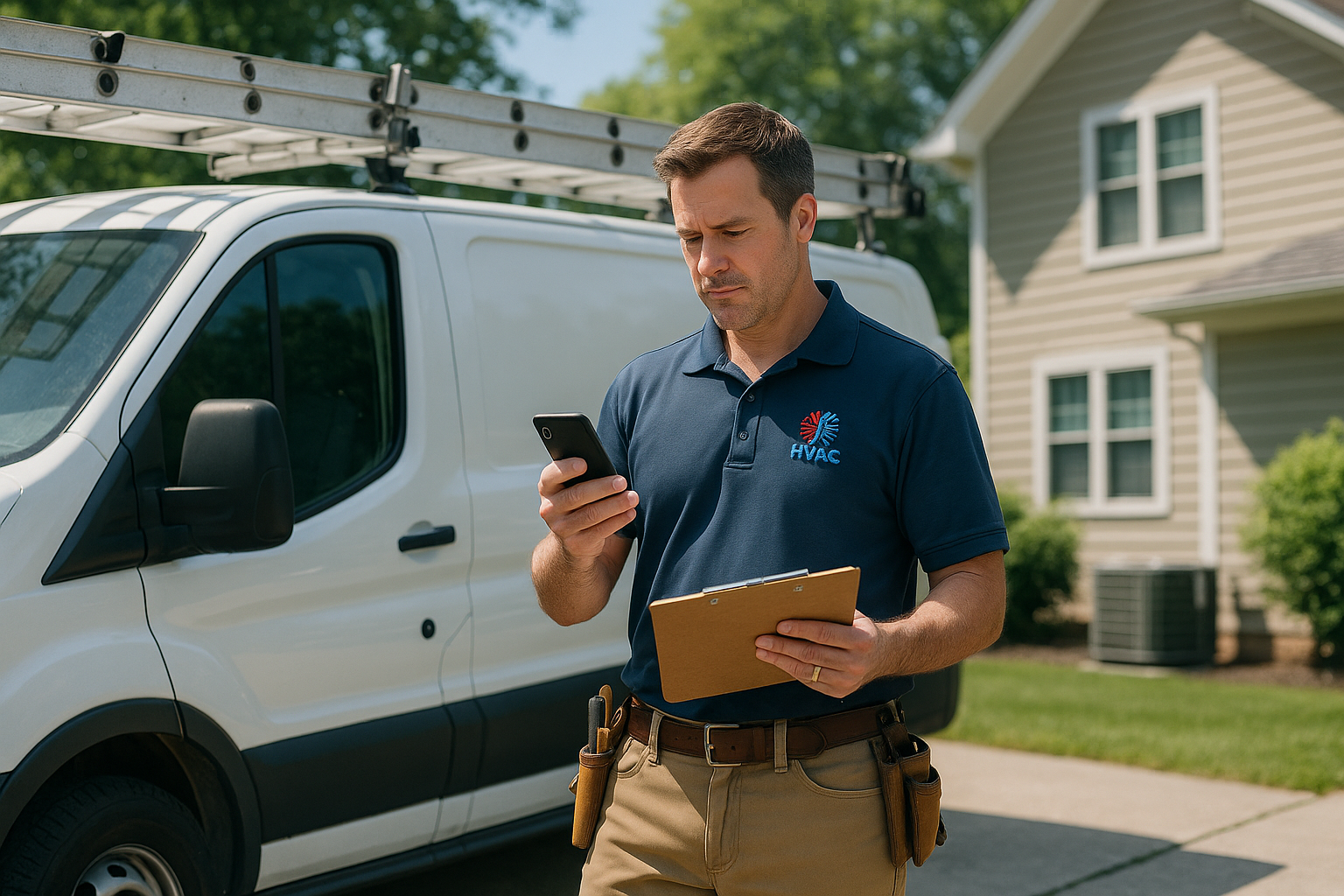

An HVAC company loses $2,400 to $4,800 per missed emergency call during peak summer breakdown season, when average residential repair tickets run $600-$800 and commercial emergency service calls average $1,500-$2,400. During the critical 8-week heat wave window when 40-55% of annual emergency revenue concentrates, missing just 3-5 calls per week costs $57,600-$96,000 in lost revenue.
Why Does Summer Represent Such a Disproportionate Revenue Window for HVAC Companies?
The math is brutal and simple: your annual revenue doesn’t distribute evenly across twelve months. For residential and light commercial HVAC contractors, the 8-week peak season from mid-June through early August generates 40-55% of total emergency service revenue. This isn’t about scheduled maintenance or new installations. This is about panicked homeowners whose AC died at 3 PM on a 97-degree Tuesday and commercial property managers whose cooling system failed in a building with 40 occupied units.
During those eight weeks, your average emergency call volume increases 300-400% compared to off-season baseline. Your technicians are dispatched wall-to-wall. Your schedule is tight. And every single call you miss goes directly to the next contractor in the caller’s search results—usually within 90 seconds.
The compounding factor: summer emergency callers convert at 78-85% when they reach a live person who can schedule immediate or same-day service. They’re not comparison shopping. They’re in crisis mode. Miss that call, and you’ve lost a $600-$2,400 job that required zero sales effort.
What Is the Real Dollar Impact of One Missed Emergency Call?
Let’s be specific. Your average residential AC repair during peak summer runs $650-$850 depending on market. That includes diagnostics, refrigerant, common part replacements, and labor. Your average commercial emergency call—retail space, small office building, or multi-unit residential—runs $1,500-$2,400 for after-hours or same-day emergency dispatch.
Now add the compounding revenue loss. A satisfied emergency customer has a 68% likelihood of booking their next seasonal maintenance with you. They’re 3.2x more likely to request you for their next repair. And they refer an average of 1.4 new customers over the following 18 months. One missed emergency call doesn’t just cost you $800 today. It costs you $2,400-$4,800 in total customer lifetime value.
During an 8-week peak season, if your company misses an average of 4 emergency calls per week—a conservative estimate for shops running lean on dispatch staff—that’s 32 missed calls. At $2,400 average lifetime value, that’s $76,800 in revenue that walked to your competitors. In eight weeks.
Why Do HVAC Companies Miss Emergency Calls During Peak Season?
It’s not incompetence. It’s capacity math. Your office staff is overwhelmed. Your lead dispatcher is juggling live technician coordination, parts ordering, and permit tracking while also trying to answer inbound calls. Emergency calls spike between 1 PM and 5 PM when systems fail under peak heat load—exactly when your team is buried managing the day’s scheduled service calls.
Here’s what actually happens at 3:47 PM on a Thursday in July. Your dispatcher is on the phone coordinating a delayed commercial job. Two technicians are texting about parts. The office phone rings four times and rolls to voicemail. The homeowner—whose AC just died and whose house is 86 degrees—hangs up, opens Google again, and calls the next number. Your competitor answers on the second ring. You just lost $2,800.
Some HVAC companies try to solve this by hiring seasonal dispatch help. But training someone to handle HVAC-specific dispatch—understanding system types, knowing your service area boundaries, managing technician schedules, coordinating emergency vs. standard calls—takes 3-4 weeks. By the time they’re competent, peak season is half over. Then you’re paying unemployment claims in September.
How Do Most HVAC Answering Services Fail During Emergency Call Situations?
Generic answering services answer the phone. That’s it. The operator takes a message, maybe logs it into their system, and emails or texts you the details. But they don’t know your technician schedules. They can’t access your dispatch board. They don’t know which neighborhoods you service or which types of systems you work on. They definitely can’t quote timeframes, schedule appointments, or dispatch a tech.
So what actually happens? The homeowner gets transferred to voicemail anyway, or they’re told “someone will call you back within 2 hours.” In an emergency cooling situation during a heat wave, 2 hours is unacceptable. The caller thanks them, hangs up, and keeps dialing. You still lost the call—you just paid someone to answer it first.
AI-only or chatbot-only solutions fail even harder during emergencies. A panicked property manager whose 12-unit building just lost cooling doesn’t want to type messages into a chat widget. They want a human who can hear the urgency in their voice and get a technician dispatched now. Generic bots can’t route calls intelligently, can’t assess true emergency priority, and can’t coordinate with your live dispatch board in real time.
What Does an Actually Effective Solution Look Like for Peak Season HVAC Call Management?
You need three things simultaneously: live people who answer during peak hours, intelligent routing that gets emergency calls to the right person immediately, and a system that captures every lead into your CRM so nothing falls through even if your dispatch team is slammed.
At Reliable Receptionist, we combine live receptionists with integrated CRM and smart call routing specifically built for trades like HVAC. Monday through Friday, 8:30 AM to 5:00 PM Pacific, your calls are answered by trained receptionists who understand HVAC terminology, can assess emergency vs. standard service priority, and can schedule appointments directly into your system or route urgent calls to your on-call dispatcher in real time.
After hours—when your competitor’s calls go to voicemail or a generic bot—we deploy a customized AI receptionist trained specifically on your business. Not a generic chatbot. An AI system that knows your service area, your system specialties, your typical response times, and your pricing structure. It captures the lead into the Reliable Response CRM, schedules follow-up, and triggers your dispatch workflow so your team sees the emergency request first thing in the morning.
The difference during peak season: you don’t lose the $2,400 lifetime value call at 4:30 PM when your dispatcher is coordinating three simultaneous jobs. You don’t lose the after-hours call at 7:15 PM when a homeowner’s AC dies during dinner. You capture it, route it, and convert it.
Want to see exactly how this works for your HVAC operation before peak season hits? Book a 20-minute demo at reliablereceptionist.com and we’ll walk through your specific call flow, dispatch process, and seasonal volume patterns.
Frequently Asked Questions
How many emergency calls does the average HVAC company miss during peak summer season?
Most HVAC companies miss 3-5 emergency calls per week during the 8-week peak season when call volume spikes 300-400% above baseline. This totals 24-40 missed calls during the critical summer window, representing $57,600-$96,000 in lost lifetime customer value when accounting for initial service, repeat business, and referrals.
What is the average revenue per emergency HVAC call during summer breakdown season?
Residential emergency AC repair calls average $650-$850 per job during peak summer season. Commercial emergency calls range from $1,500-$2,400. When factoring in customer lifetime value—including future maintenance, repairs, and referrals—each emergency call represents $2,400-$4,800 in total revenue over 18 months.
Why do HVAC emergency calls spike between 1 PM and 5 PM during heat waves?
AC systems fail most frequently during peak heat load hours when outdoor temperatures are highest and systems have been running continuously since morning. This creates maximum stress on compressors, capacitors, and refrigerant systems. The 1-5 PM window coincides with both peak system strain and peak staff workload for HVAC dispatch teams.
Can a generic answering service effectively handle HVAC emergency dispatch calls?
No. Generic answering services take messages but cannot access your dispatch system, assess true emergency priority, coordinate technician schedules, or provide accurate service timeframes to callers. During genuine cooling emergencies, callers need immediate dispatch coordination—not a promise that someone will call back in 2 hours, which typically results in the customer calling your competitor instead.
What percentage of annual HVAC emergency revenue comes from the 8-week summer peak season?
The 8-week peak season from mid-June through early August generates 40-55% of annual emergency service revenue for residential and light commercial HVAC contractors. This concentration makes every missed call during this window significantly more costly than missing calls during off-season months when volume and urgency are lower.
Ready to stop missing calls? Explore our live receptionist service, AI assistants, and Reliable Response — our free integrated CRM, or see our plans and pricing.