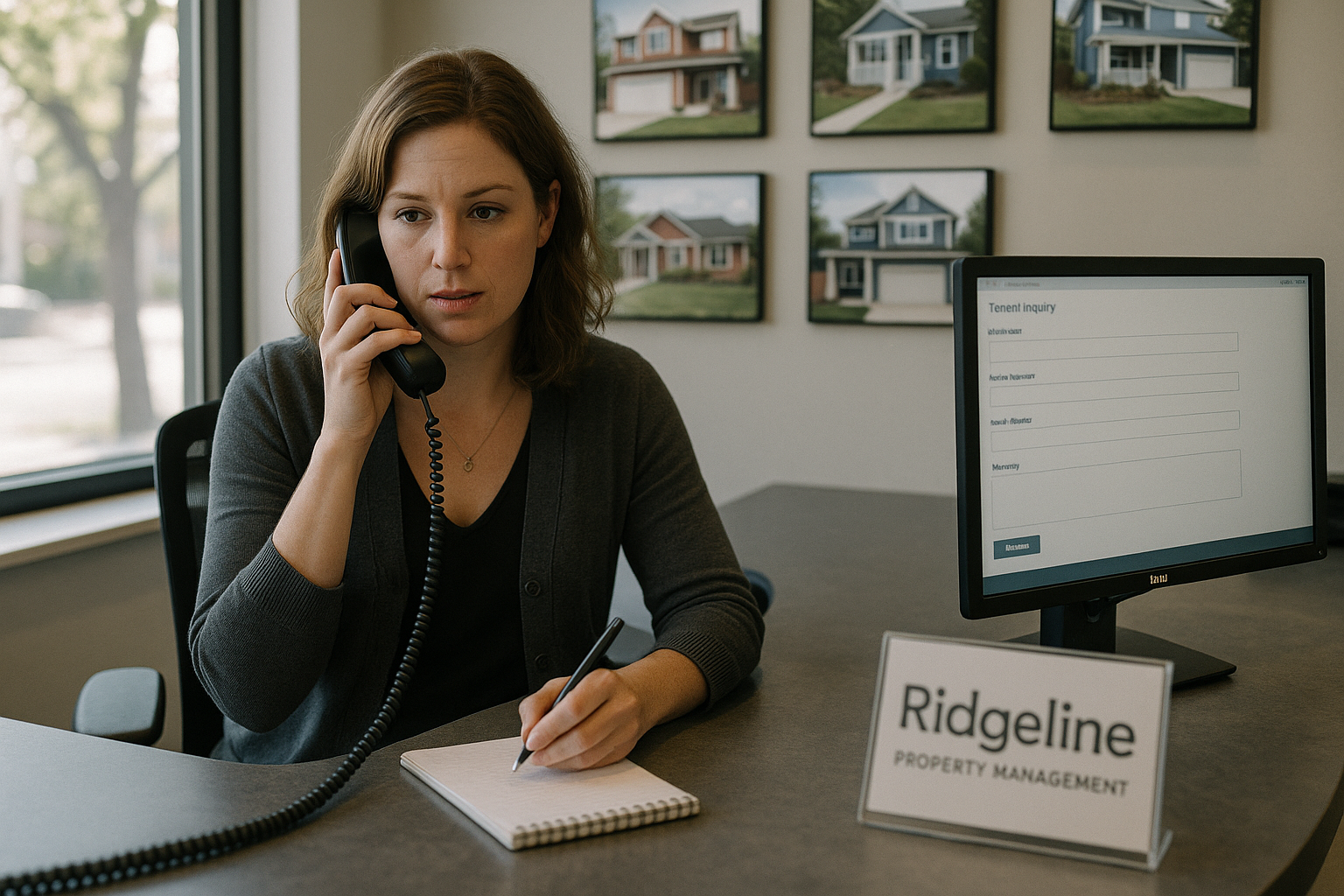

Most financial advisory clients expect a callback within four hours during business hours. After 24 hours without a response, nearly half will begin researching other advisors. That window tightens even further during volatile markets, open enrollment season, or around tax deadlines—when delay feels like indifference and indifference feels like professional malpractice.
What Happens When a Client’s Call Goes Unreturned?
A missed callback isn’t just a scheduling inconvenience. For the client, it’s a data point about trust.
When a client calls during market turbulence—portfolio down eight percent in a week, news cycle feeding anxiety—they’re not looking for a white paper. They’re looking for confirmation that someone is watching their money. The call itself is the reassurance. If it goes unreturned, the client doesn’t think you’re busy. They think they’re not a priority.
That assumption compounds. One unreturned call becomes a pattern in the client’s mind, even if it’s an outlier in yours. They begin to question other things: Is my advisor too busy to notice when my portfolio drifts? Will I have to chase them down at renewal time? If I need to adjust my distribution strategy mid-year, will I be able to reach someone?
By the time 48 hours pass, you’re not just behind on a callback. You’re defending the relationship.
Why Do Financial Advisors Miss Client Calls in the First Place?
Most missed calls aren’t a function of neglect. They’re a function of structure.
An advisor is in a quarterly portfolio review that runs 90 minutes. The client who called at 10:15 AM gets routed to voicemail. The advisor wraps the meeting at noon, returns three emails flagged urgent, takes a compliance call, and starts prepping for a 2:00 PM prospect meeting. By 4:45 PM, they remember the voicemail. By then, the client has already Googled “fee-only financial advisors near me.”
The issue isn’t that advisors don’t care. It’s that there’s no system to close the loop in real time. Voicemail is a storage system, not a response system. It logs the call, but it doesn’t capture context, route by urgency, or trigger a follow-up workflow. The callback depends entirely on the advisor’s memory and margin—and most advisors are running their practices with neither to spare.
Front-desk staff help, but only during the hours they’re scheduled. After 5:00 PM, on weekends, and during lunch breaks, you’re back to voicemail. That creates gaps exactly when clients are most likely to call: evenings after they’ve checked their quarterly statement, weekends after a concerning news cycle, early mornings before they leave for work.
How Does a Delayed Callback Translate Into Professional Liability?
Unreturned client calls don’t just damage relationships. In certain scenarios, they expose you to regulatory and fiduciary risk.
If a client calls to request a portfolio rebalancing, a distribution change, or to report a life event that affects their financial plan—and that call goes unreturned for days—the advisor may face a gap in documentation. Regulators expect advisors to act on material client instructions within a reasonable timeframe. “I didn’t get the message” is not a defense if the client can show they left three voicemails over five business days.
Even outside explicit instructions, there’s the question of fiduciary duty. If a client calls during a market downturn expressing concern about risk exposure, and the advisor doesn’t respond until after further losses, the client may argue the delay constituted a failure to act in their best interest. It’s a gray area, but it’s one that becomes sharply defined in arbitration.
Then there’s the compliance documentation problem. Missed calls mean missed records. If the client later disputes advice, changes their story about a conversation, or claims they were never informed of a material risk, you have no contemporaneous record of the communication attempt. The voicemail sat in a queue. No one logged it. No one followed up. The gap in your CRM is now a gap in your defense.
What Do Clients Actually Expect From Callback Timing?
Clients segment callback urgency into three tiers, whether they say so explicitly or not.
Tier one: time-sensitive requests. These include calls about required minimum distributions approaching a deadline, beneficiary changes following a death or divorce, or concerns about a specific holding during a volatile trading day. Clients expect a response within hours, not days. If you don’t return these calls the same business day, the client interprets it as operational failure.
Tier two: planning and advisory questions. A client calls to discuss rolling over a 401(k), adjusting their asset allocation, or scheduling their annual review. These feel less urgent to the client, but they still expect contact within 24 hours. If it stretches to 48 hours, they start to feel like they’re bothering you. By 72 hours, they’re annoyed.
Tier three: general inquiries. Questions about a form, a statement they don’t understand, whether you received a document they sent. These can wait a day or two without damaging trust, but only if the client knows you received the message and will respond. Silence for a week makes even a low-priority question feel like you don’t have systems in place.
The differentiator isn’t always the content of the call. It’s whether the client feels heard immediately. A live person who says “I’ll have him call you back within two hours” buys you time and preserves trust. Voicemail for three days does neither.
How Do Competitors Handle After-Hours and Overflow Calls?
Most advisory firms route overflow and after-hours calls one of three ways: voicemail, a generic answering service, or a receptionist who takes a message but has no context about your practice.
Voicemail is the default, and it’s where most client frustration starts. The client calls at 6:30 PM after reviewing their quarterly statement and finding a holding they don’t recognize. They leave a message asking what it is and why it’s in their portfolio. No one hears that message until 9:00 AM the next day. No one calls back until 3:00 PM. By then, the client has spent 20 hours convinced you put them into something speculative without telling them.
Generic answering services are slightly better. A live person answers, takes the name and number, and emails you the message. But the receptionist doesn’t know your clients, doesn’t have access to your calendar, and can’t determine urgency. Every call gets the same treatment: “I’ll pass along the message.” The client still waits. You still have no workflow to ensure follow-up.
A few firms use AI-only chatbots for after-hours intake. The problem is that these bots are built on general scripts. They don’t know your service model, your clients, or your CRM. They capture a name and number, maybe log it somewhere, but they can’t schedule a call, route based on account type, or trigger a next-day workflow in your planning software. The client gets a response, but it’s not a useful one.
What Does a Functional After-Hours System Actually Require?
A system that protects client relationships and reduces liability needs to do three things: answer every call with context, capture the information into your working CRM, and route or escalate based on urgency.
During business hours, that means a live receptionist who knows your practice, can access your calendar, and understands the difference between a routine question and a time-sensitive request. After hours, it means a trained AI system—not a generic bot—that knows your clients, your services, and your workflows, and that integrates directly with your CRM so nothing is lost or manually re-entered.
The key is integration. If the after-hours system operates in a silo—capturing messages in a separate inbox or platform—you’re still playing catch-up the next morning. But if every after-hours inquiry is logged as a lead or task in the CRM you already use, with notes about urgency and next steps, you start each day with a prioritized callback list instead of a pile of voicemails.
This also solves the compliance documentation gap. Every client interaction is recorded with a timestamp, the nature of the inquiry, and the action taken. If a client later disputes what was discussed or when they called, you have a record that was created in real time, not reconstructed from memory.
Reliable Receptionist combines live receptionists during business hours (Monday–Friday, 8:30 AM–5:00 PM Pacific) with after-hours AI that’s trained on your specific advisory practice. The system integrates with the Reliable Response CRM, so every call—whether answered by a person or the AI—is captured, categorized, and routed according to the workflows you define. Clients get an immediate response. You get documented accountability. Book a 20-minute demo at reliablereceptionist.com to see how it works for advisory firms.
Frequently Asked Questions
How long should a financial advisor take to return a client call?
Best practice is within four hours during business hours for most inquiries, and same-day for anything time-sensitive like distribution requests or market-related concerns. After 24 hours, client trust begins to erode measurably.
What happens if a financial advisor doesn’t return a client call for several days?
The client often begins researching other advisors, questions whether they’re a priority, and may interpret the delay as a lack of fiduciary attentiveness. In some cases, delayed responses to material client instructions can create regulatory or liability exposure.
Do financial advisors have a legal obligation to return client calls quickly?
There’s no explicit regulatory deadline, but fiduciary duty implies timely responsiveness, especially for material requests like portfolio changes or distributions. Prolonged silence can be cited as evidence of failing to act in the client’s best interest.
How can financial advisors ensure calls are answered when they’re in meetings?
Live receptionist services during business hours and trained AI systems after hours ensure every call is answered with context, captured into the CRM, and routed based on urgency—so nothing falls into a voicemail void.
What’s the risk of using voicemail for after-hours financial advisory calls?
Voicemail creates response delays that damage client trust, offers no documentation until manually reviewed, and provides no way to prioritize urgent calls. Clients often interpret voicemail as indifference, especially during volatile markets or around key financial deadlines.
Can a generic answering service handle calls for a financial advisory firm?
Generic services can take a message, but they lack the context to assess urgency, can’t access your calendar or CRM, and don’t integrate with your existing workflows. The result is the same as voicemail: the client waits, and you’re still manually triaging messages the next day.
Ready to stop missing calls? Explore our live receptionist service, AI assistants, and Reliable Response — our free integrated CRM, or see our plans and pricing.