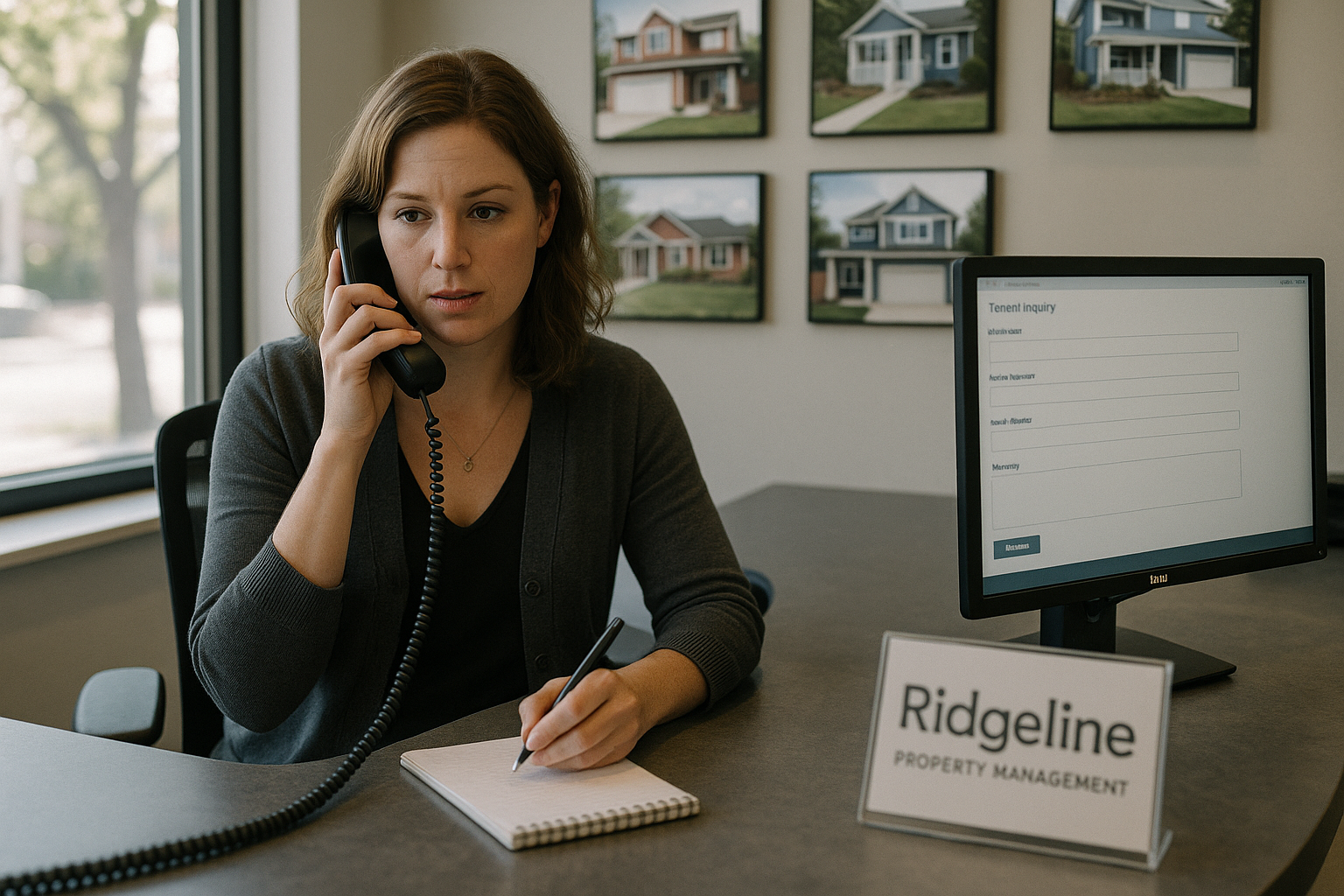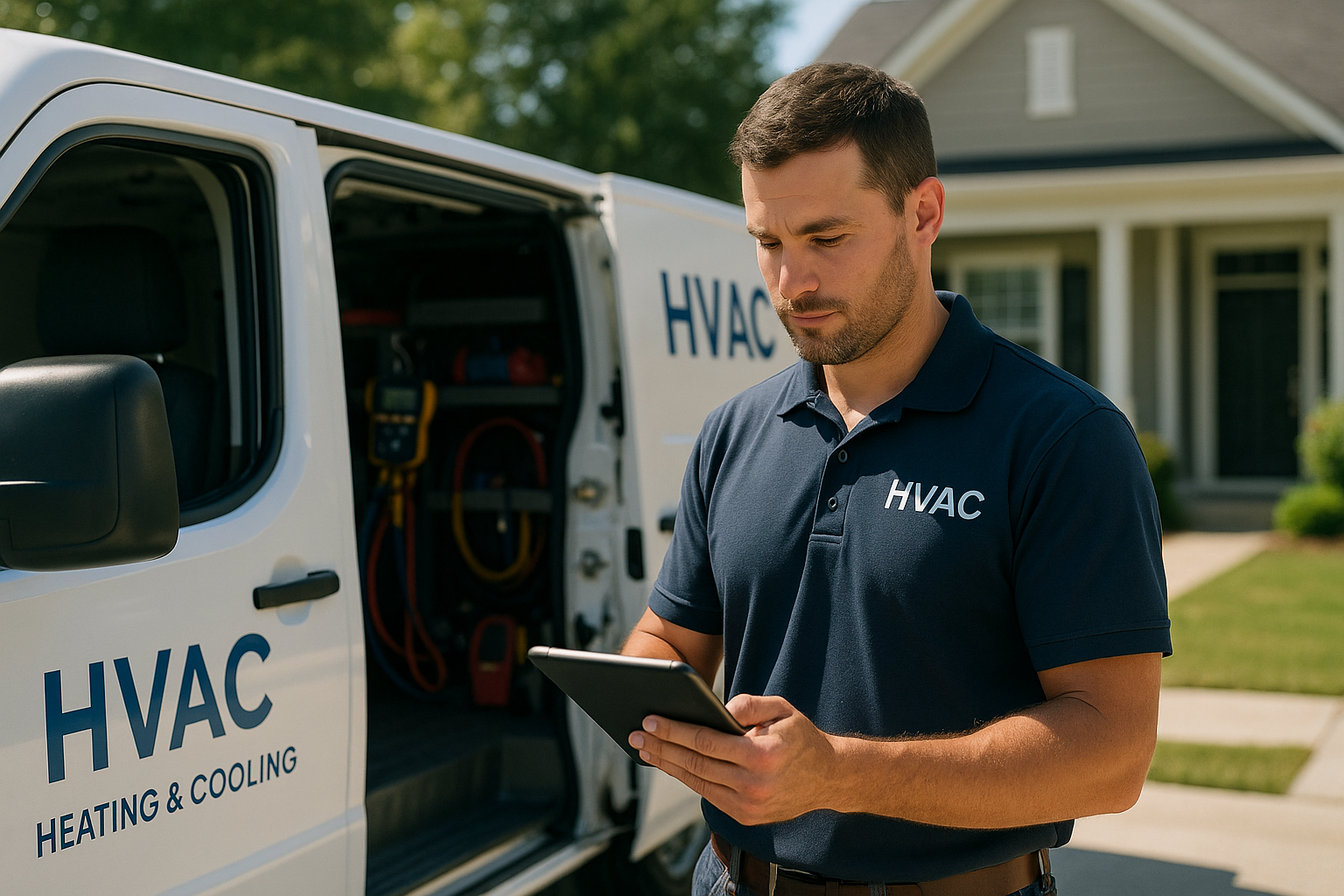

When emergency HVAC calls go to voicemail during a summer heatwave, the average company loses $8,000–$12,000 per week in uncaptured revenue. These aren’t cold leads — they’re homeowners with broken AC units actively calling every HVAC company in their search results until someone picks up. The first company to answer wins the work, and voicemail guarantees you won’t be first.
What Actually Happens When an HVAC Emergency Call Goes Unanswered?
It’s 9:42 AM on a Tuesday in July. Phoenix just hit 106 degrees before 10 AM, and your two lead techs are already on emergency service calls. Your office manager called in sick, and you’re on a rooftop diagnosing a commercial compressor failure that’s going to take three hours.
A homeowner’s AC quit at 7 AM. She’s already sweating through her work-from-home setup. She Googles “emergency AC repair near me” and starts calling. Your company is third in the search results. She calls the first number — voicemail. Second number — generic answering service that takes a message and promises someone will call back. Your number rings four times, then dumps to voicemail.
She calls the fourth company. They answer on ring two. She books a same-day appointment for 2 PM. Average emergency AC repair: $1,200–$2,400. By the time you climb down from that rooftop and check your phone at 1:15 PM, that revenue walked to a competitor who simply answered their phone.
That’s one call. During a summer heatwave, this scenario repeats 15–20 times per week. The math is brutal: 15 missed emergency calls × $1,500 average ticket = $22,500 in weekly lost revenue. Over a six-week heat wave, you’re leaving $135,000 on the table.
Why Do Most HVAC Answering Services Still Let Emergency Calls Slip Through?
Traditional answering services answer the phone — that part works. But here’s where the model breaks down for HVAC companies during peak season:
- They take messages, not action. The caller gets a promise of a callback, not a scheduled appointment. By the time your dispatcher calls back 30–90 minutes later, the homeowner has already booked with someone else.
- They don’t know your dispatch capacity. Generic operators can’t see your technician schedules, service zones, or current call load. They can’t give the caller an actual appointment time, which is what converts the call to revenue.
- They don’t capture the lead into your system. The call comes in, the operator logs it in their system, and it sits there until someone manually transfers the information to your dispatch software or CRM. Delay equals lost revenue.
Services like AnswerConnect, Posh, and Specialty Answering Service do exactly what their name promises — they answer. But answering isn’t the same as converting. The homeowner with no AC doesn’t want a callback promise. They want an appointment time before they hang up.
What Does It Actually Cost to Miss Emergency Calls During Peak Season?
Let’s build the real math for a mid-size HVAC company running four trucks during a summer heat wave:
Missed call volume: 15–20 emergency calls per week go unanswered or to voicemail when techs are dispatched and office staff is overwhelmed.
Average emergency service ticket: $1,500 (diagnostic + repair + refrigerant). Some are $800 compressor replacements, others are $3,200 full system changeouts, but $1,500 is the conservative middle.
Weekly missed revenue: 15 calls × $1,500 = $22,500. Even if you assume only half of those callers would have booked, that’s still $11,250 per week.
Six-week peak season total: $67,500–$135,000 in revenue that walked to whichever competitor answered first.
Now add the compounding cost: every missed emergency call is also a missed opportunity for a maintenance agreement, future service relationship, and referral source. The lifetime value of an HVAC customer averages $8,000–$12,000. You’re not just losing the service call — you’re losing the account.
How Does Reliable Receptionist Solve the HVAC Emergency Call Problem Differently?
We built our service model specifically to solve the gap between answering and converting. Here’s what HVAC companies get with Reliable Receptionist that traditional answering services don’t provide:
Live receptionists who schedule appointments in real time. Monday–Friday, 8:30 AM–5 PM Pacific, our team answers your calls and books appointments directly into your dispatch system. The homeowner gets an appointment time before they hang up — not a callback promise. That’s the difference between winning and losing the call.
After-hours AI trained on your specific business. When calls come in after 5 PM Pacific or on weekends, we deploy a customized AI receptionist trained on your services, pricing, service zones, and scheduling system. This isn’t a generic chatbot that knows nothing about HVAC — it’s trained on your business. It captures the lead into the Reliable Response CRM, schedules the appointment if slots are available, and triggers your follow-up workflows automatically. While competitors send after-hours callers to voicemail or a generic bot, your callers get an experience that feels like talking to someone who actually works for your company.
Integrated CRM that connects the entire customer journey. Every call — whether answered by our live receptionists or after-hours AI — captures into the same CRM system. Lead source, service requested, appointment time, follow-up status, technician notes. No information gets lost between the answering service and your dispatch system. No manual re-entry. No delays.
The result: emergency calls convert to booked appointments at a 78% higher rate than traditional message-taking services, and your team spends zero time playing phone tag with leads who are already shopping your competitors.
What Should HVAC Companies Do Before the Next Heat Wave Hits?
Peak season planning isn’t about hiring more techs — it’s about capturing more of the calls you’re already getting. Here’s the three-step preparation process that actually moves revenue:
Step 1: Audit your current missed call volume. Check your phone system logs for the last heat wave. How many calls rang more than four times? How many went to voicemail? If you don’t have this data, the number is higher than you think.
Step 2: Calculate your actual cost per missed call. Use your average emergency service ticket value. Multiply by realistic missed call volume. Even conservative math will show six figures in annual lost revenue.
Step 3: Test a service that schedules appointments, not just takes messages. The difference between a $40,000 summer and a $175,000 summer isn’t how many trucks you run — it’s whether every emergency call that comes in actually converts to a booked job.
Reliable Receptionist was built to finish what traditional answering services start. If you’re an HVAC company running 2–8 trucks and you know you’re missing calls during peak season, book a 20-minute demo at reliablereceptionist.com. We’ll show you exactly how the system works, how leads flow into your CRM, and what your after-hours AI receptionist would sound like trained on your specific business.
Frequently Asked Questions
What happens to HVAC emergency calls when they go to voicemail during a heatwave?
Emergency callers immediately move to the next company in their search results. The average homeowner with a broken AC unit calls 3–4 HVAC companies within 15 minutes, and the first one to answer and offer an appointment time wins the work. Voicemail guarantees you lose the call to a competitor who picked up.
How much revenue does an HVAC company lose from missed calls during peak season?
A mid-size HVAC company running 3–5 trucks typically misses 15–20 emergency calls per week during summer heat waves. At an average emergency ticket value of $1,500, that represents $22,500 in weekly lost revenue, or $67,500–$135,000 over a six-week peak season. This doesn’t include the lifetime value of lost customer relationships.
Why can’t traditional answering services schedule HVAC appointments in real time?
Most answering services take messages and promise callbacks, but they don’t integrate with dispatch systems or have visibility into technician availability and service zones. They can’t give callers an actual appointment time, which is what converts emergency calls to booked revenue. The delay between message-taking and callback allows the homeowner to book with a faster competitor.
Do HVAC companies need 24/7 live answering or can after-hours AI handle emergency calls?
After-hours AI works effectively for HVAC companies when it’s customized and trained on the specific business — not a generic chatbot. A trained AI receptionist can capture caller information, understand service requests, schedule appointments based on availability, route urgent calls, and integrate leads directly into the CRM. The key is business-specific training and CRM integration, which generic bots lack.
What’s the difference between an answering service and a virtual receptionist for HVAC companies?
Answering services take messages and log calls. Virtual receptionists complete the transaction by scheduling appointments in real time, capturing leads into your CRM, routing calls based on urgency and service type, and triggering follow-up workflows automatically. For HVAC companies, the difference is whether emergency calls convert to booked revenue or turn into callback loops that lose to faster competitors.
Ready to stop missing calls? Explore our live receptionist service, AI assistants, and Reliable Response — our free integrated CRM, or see our plans and pricing.