
When an HVAC company misses a 9 PM emergency call during peak summer heat, they lose an average $1,200–$2,800 service call to a competitor who answers after hours. The caller immediately moves to the next search result, and that revenue — plus future maintenance contracts and referrals — disappears within five minutes of the missed connection.
What Does a Missed After-Hours Emergency Call Actually Cost an HVAC Business?
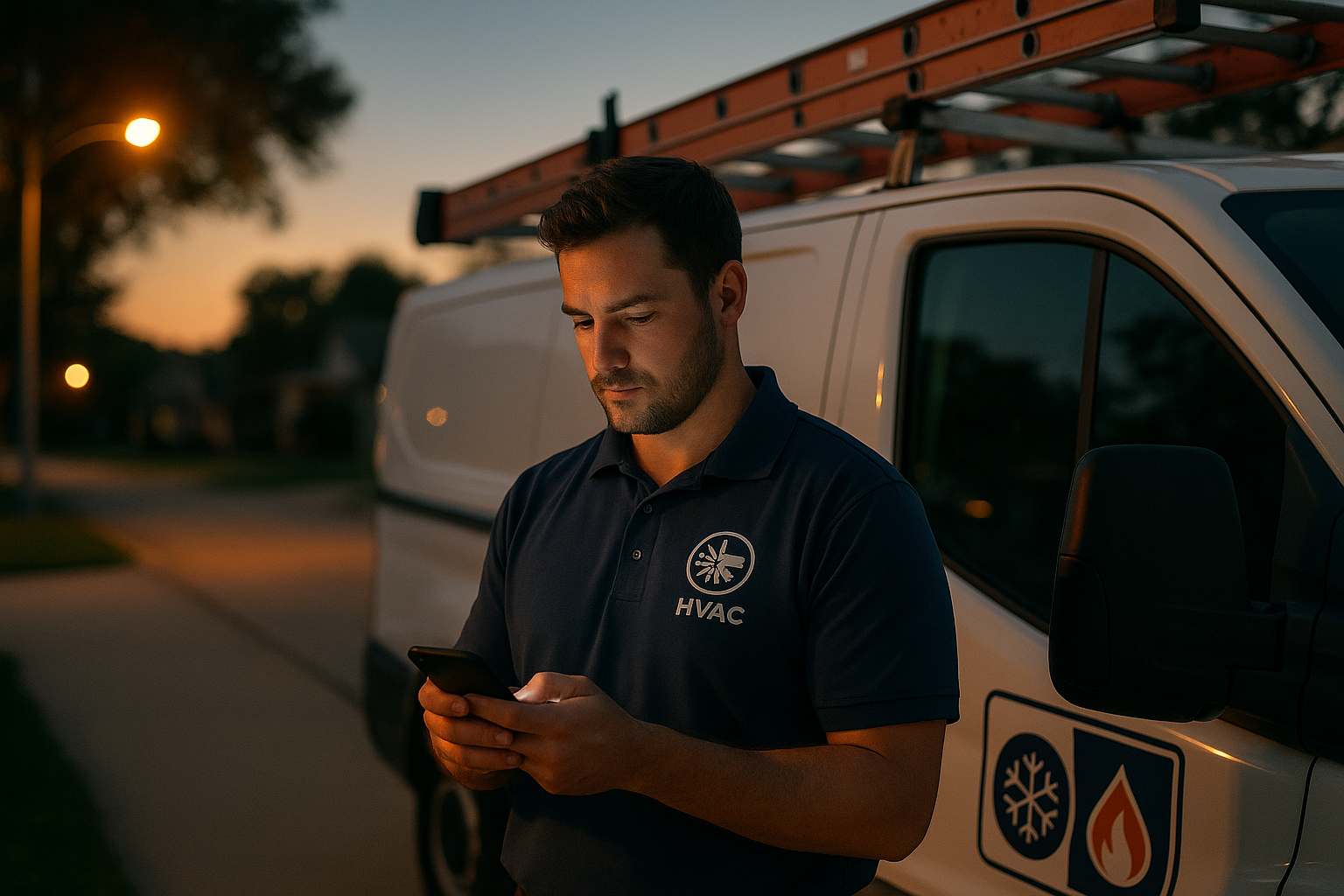
It’s 9:14 PM on a Tuesday in July. The outdoor temperature hit 103 degrees at 2 PM and hasn’t dropped below 92. A homeowner in a two-story house just realized their AC stopped blowing cold air. Two kids under five are melting. The thermostat reads 84 degrees inside and climbing.
They Google “emergency HVAC repair near me.” Your company appears third in the results. They tap to call. It rings four times and goes to voicemail: “Our office hours are Monday through Friday, 8 AM to 5 PM. Please leave a message and we’ll return your call during business hours.”
They hang up before the beep. They call the company ranked fourth. A live person answers. The technician is dispatched within twenty minutes. Your company just lost a $1,800 emergency service call, a $3,200 annual maintenance contract, and three referrals that would have come from that grateful homeowner over the next twelve months.
The total opportunity cost of that one missed call: $8,400 over eighteen months. And it happens because your phone system treats a family emergency like a routine inquiry that can wait until morning.
Why Do Generic After-Hours Solutions Fail HVAC Companies During Peak Season?
Most HVAC companies rely on one of three systems after 5 PM: voicemail, a generic answering service that takes a message, or a chatbot that can’t handle the complexity of emergency dispatch decisions.
Voicemail is immediate abandonment. Callers experiencing a climate emergency will not wait twelve hours for a callback. They’re scrolling to the next result before your voicemail greeting finishes.
Generic answering services answer the phone, but they can’t make intelligent routing decisions. They don’t know which technician is on call tonight. They don’t know your emergency service rates or dispatch radius. They don’t know whether the caller’s ZIP code is in your coverage area. They take a message and promise someone will call back — which still loses you the call, because the homeowner needs help now, not a return call in thirty minutes.
Generic chatbots fail even harder. A panicked homeowner asks, “Do you cover Riverside?” The bot doesn’t know. They ask, “How fast can someone get here?” The bot offers to take a message. They ask, “What’s the emergency call-out fee?” The bot loops back to office hours. The caller leaves and never returns.
What’s the Revenue Impact of After-Hours Failures Across a Full Summer Season?
Summer heat waves create the highest call volume and highest per-call revenue of the year for HVAC companies. June through August represents 40–50% of annual emergency service revenue for most residential HVAC businesses.
A mid-sized HVAC company serving 50–70 service calls per week during summer will receive 15–25 after-hours emergency calls per week during peak heat. If your system misses or fumbles even half of those calls, the math is brutal:
- 10 missed emergency calls per week
- Average emergency service ticket: $1,600
- 12-week peak season (mid-June through early September)
- Total missed revenue: $192,000
That figure doesn’t account for the maintenance contracts you didn’t upsell, the repeat customers you didn’t earn, or the referrals that never happened because you weren’t the company that showed up when it mattered most.
The businesses that win summer aren’t the ones with the most trucks. They’re the ones that answer the phone when a family is desperate.
How Does Reliable Receptionist Handle After-Hours HVAC Emergencies Differently?
We combine live receptionists during business hours (Monday through Friday, 8:30 AM to 5 PM Pacific) with customized AI trained specifically on your HVAC business after hours. This isn’t a generic chatbot — it’s an AI receptionist that knows your service area, your emergency rates, your technician schedules, and your dispatch protocols.
When a caller reaches your line at 9 PM, our after-hours AI can answer questions like: “Do you cover my ZIP code?” “What’s the emergency service fee?” “How fast can someone get here?” It captures every detail into the Reliable Response CRM — name, address, phone, problem description, urgency level. It can schedule the service call, trigger your on-call dispatch workflow, and send an immediate confirmation text to the homeowner.
The difference is completion. Other services answer the phone. We capture the lead, schedule the call, route it to the right technician, and automate the follow-up. The homeowner gets certainty. You get the revenue.
And because the AI is integrated with your CRM, you see every after-hours lead in your pipeline the next morning — complete with caller details, service type, and appointment status. No missed notes. No lost opportunities. No wondering what happened overnight.
What Should an HVAC Company Do Before the Next Heat Wave Hits?
Peak season waits for no one. The next heat wave will generate the same after-hours emergency volume, and if your phone system isn’t ready, you’ll lose the same revenue to competitors who are.
The solution isn’t hiring a night-shift receptionist. It’s deploying a system that knows your business well enough to act on your behalf — capturing leads, scheduling service, and automating dispatch — while you’re off the clock.
We’ve built that system for HVAC companies across the country. It doesn’t replace your team. It extends your capacity to capture every call, every lead, every opportunity — even at 9 PM on the hottest night of the year.
Book a 20-minute demo at reliablereceptionist.com and see exactly how we’d handle your after-hours calls. Bring a real scenario. We’ll walk through it live.
Frequently Asked Questions
What happens if an HVAC company doesn’t answer after-hours emergency calls?
The caller immediately moves to the next company in their search results. HVAC emergencies during heat waves are time-sensitive — homeowners will not wait for a callback. Missed after-hours calls result in lost revenue, lost maintenance contracts, and lost referrals, often totaling $5,000–$10,000 per missed opportunity when lifetime value is included.
How much revenue do HVAC companies lose from missed after-hours calls during summer?
A mid-sized HVAC company missing just half of after-hours emergency calls during a 12-week peak season can lose $150,000–$200,000 in immediate service revenue. This doesn’t include the long-term value of maintenance contracts, repeat business, and referrals that would have originated from those emergency calls.
Can a chatbot handle HVAC emergency calls after hours?
Generic chatbots fail at HVAC emergency calls because they can’t answer specific questions about service areas, dispatch times, emergency rates, or technician availability. Customized AI trained on your specific business can handle these questions, capture leads into your CRM, schedule service calls, and trigger dispatch workflows — but only if it’s integrated with your systems and trained on your protocols.
What’s the difference between a live answering service and an AI receptionist for HVAC after hours?
Live answering services answer the phone but typically can’t access your scheduling system, CRM, or dispatch protocols. They take messages and promise callbacks, which still loses many emergency callers. A customized AI receptionist integrated with your CRM can capture full lead details, schedule appointments, route to on-call technicians, and trigger automated follow-up — completing the transaction instead of just recording it.
When do HVAC companies receive the most after-hours emergency calls?
HVAC emergency call volume spikes during heat waves, typically mid-June through early September. Evening hours between 6 PM and 11 PM see the highest volume, as homeowners return from work and realize their AC has failed. A single week during a heat wave can generate 15–25 after-hours emergency calls for a mid-sized residential HVAC company.
Ready to stop missing calls? Explore our live receptionist service, AI assistants, and Reliable Response — our free integrated CRM, or see our plans and pricing.