
Everyone’s Talking About AI Call Answering—But No One Mentions What Happens After the Call Ends
You’ve probably seen the headlines. Ooma just rolled out AI-powered answering tools. BotPhone launched in Overland Park promising 24/7 call coverage. Ruby Receptionist, AnswerConnect, and Moneypenny have been around for years, handling overflow and after-hours calls for HVAC companies across the country.
They all solve the same problem: someone answers when your techs are on a ladder and your office manager is dispatching three emergency calls at once. That’s valuable. But here’s what the “best answering service” lists never tell you: answering the call is only half the job.
The other half—booking the appointment, accessing service history, tracking the lead through to completion—gets dropped. And that’s where HVAC companies lose real money.
Tuesday, 6:18 PM: The Call Gets Answered. The Install Gets Lost.
It’s early March. Your last tech clocked out at 5:45. A homeowner calls because their 22-year-old furnace finally died, and they want a replacement quote before the weekend cold snap hits.
The AI answers. Polite. Professional. Takes a message. Promises someone will call back tomorrow.
By 9 AM Wednesday, your office manager has 11 missed call notifications, four dispatch requests, two supplier invoices to process, and a tech calling in sick. The furnace replacement callback? It’s note number seven in a list she won’t reach until after lunch.
By then, the homeowner has already called two other companies. One of them answered live, checked their calendar in real time, and booked a quote appointment for Thursday morning.
Your company never had a shot. Not because the call wasn’t answered—but because the call wasn’t converted.
The Math HVAC Owners Can’t Ignore
Let’s run conservative numbers for a mid-sized HVAC operation:
- Emergency service calls: Average ticket $500–$1,200. Miss two per month because of callback delays or lost messages, and you’re down $12,000–$28,800 annually.
- Install consultations: Furnace or full HVAC system replacement averages $5,000–$8,000. Miss one per month—just one—and that’s $60,000–$96,000 in lost revenue every year.
- Seasonal surges: If you lose three high-ticket jobs during peak heating or cooling season because your answering service couldn’t check availability or prioritize urgency, you’ve erased the profit margin for the entire quarter.
These aren’t hypothetical losses. They’re the direct result of a system that stops at “call answered” and never makes it to “appointment booked.”
What BotPhone and Ooma Do Well—And Where They Stop
Let’s be clear: AI answering tools and traditional virtual receptionists aren’t bad. They handle high call volume. They’re available 24/7. They’re far better than voicemail.
But they weren’t built for HVAC operations. Here’s what they’re missing:
- No access to your service history. When a repeat customer calls about a furnace you installed three years ago, the AI can’t pull that record. It can’t prioritize them as a loyal client or note that they’re due for maintenance.
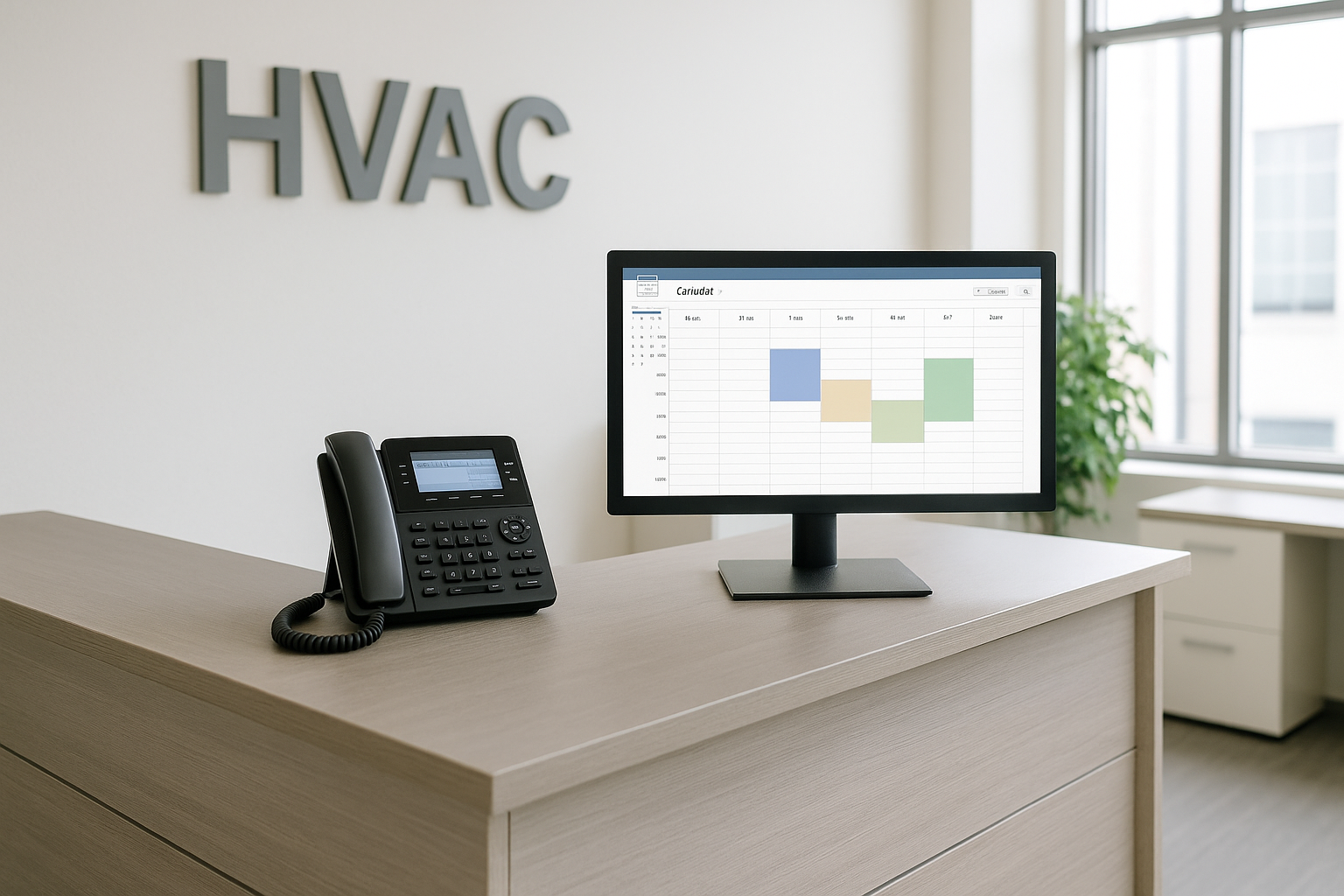
- No real-time scheduling integration. They take a message and promise a callback. They don’t check your calendar, offer available time slots, or book the appointment while the customer is still on the line.
- No lead tracking through to close. The call gets logged. Then it disappears into your inbox, your text messages, or a spreadsheet. You have no way to know if the lead was followed up on, quoted, booked, or lost to a competitor.
You’re paying for someone to answer the phone. But you’re not paying for anyone to capture the revenue.
Three Things HVAC Companies Actually Need (That Most Services Don’t Provide)
If your answering service isn’t doing all three of these things, you’re leaving money on the table:
1. Real-Time Appointment Booking
Customers don’t want to wait for a callback. They want a time slot—now. That means live access to your dispatch calendar and the authority to book service calls, quotes, and installs on the spot.
2. HVAC-Specific Call Prioritization
A no-heat emergency in January is not the same as a maintenance checkup request in May. Your receptionists need to understand HVAC urgency, recognize high-value opportunities, and route calls accordingly.
3. Integrated CRM That Tracks Every Lead
From first call to completed job, every interaction should live in one system. No more lost sticky notes. No more “I think we called them back.” You should be able to see exactly where every lead stands and what happens next.
What to Look For When Choosing an AI Receptionist for Your HVAC Business
Not all AI receptionist services are created equal. When evaluating your options, there are three key components to consider:
1. The Caliber of the Technology
This includes real-time integrations with your scheduling software, access to live data like service history and customer records, and the ability to perform actions—not just relay messages. Can the system actually book appointments while the customer is on the line? Can it pull up past service records for repeat clients? Technology that only answers calls but can’t access your business systems won’t move the needle.
2. The Availability of Human Backup
Some customers just prefer talking to a real person, especially when they’re dealing with an emergency or a high-ticket purchase decision. The best solutions offer live receptionist support for situations where AI alone isn’t enough—giving your customers choice and your business flexibility.
3. The People Behind the AI
AI doesn’t run itself. Someone has to do the programming, prompting, monitoring, and ongoing optimization. The quality of that human expertise—the team configuring responses, training the system on HVAC-specific scenarios, and continuously improving performance—determines whether your AI receptionist gets smarter over time or stays stuck repeating generic scripts.
When all three components work together—strong technology, human support when needed, and skilled professionals managing the system—you get more than call coverage. You get a revenue engine.
How Reliable Receptionist Completes What Answering Services Leave Unfinished
We’re not here to replace BotPhone or Ooma. We’re here to finish what they started.
Reliable Receptionist combines live receptionists who understand HVAC operations, AI support for after-hours coverage, and a built-in CRM that captures every lead from the first ring to the final invoice.
When a homeowner calls about a furnace replacement, we don’t just take a message. We check your calendar, offer available appointment times, book the consultation, and log everything in your CRM. When a repeat customer calls for emergency service, we pull their history, prioritize the call, and get them scheduled immediately.
You stop losing leads in the gap between “call answered” and “job booked.” Your team stops playing phone tag. Your customers stop calling your competitors because they were the first to offer a real appointment.
Stop Paying for Half a Solution
Answering calls is not the same as winning jobs. If your current service can’t book appointments, access service history, or track leads through to close, you’re paying for coverage—but losing revenue.
HVAC companies don’t need more voicemail. They need a system that turns every call into a booked appointment and every appointment into a tracked opportunity.
That’s what we built. See how Reliable Receptionist works for HVAC companies—book a 20-minute demo at reliablereceptionist.com.
Ready to stop missing calls? Explore our live receptionist service, AI assistants, and Reliable Response — our free integrated CRM, or see our plans and pricing.